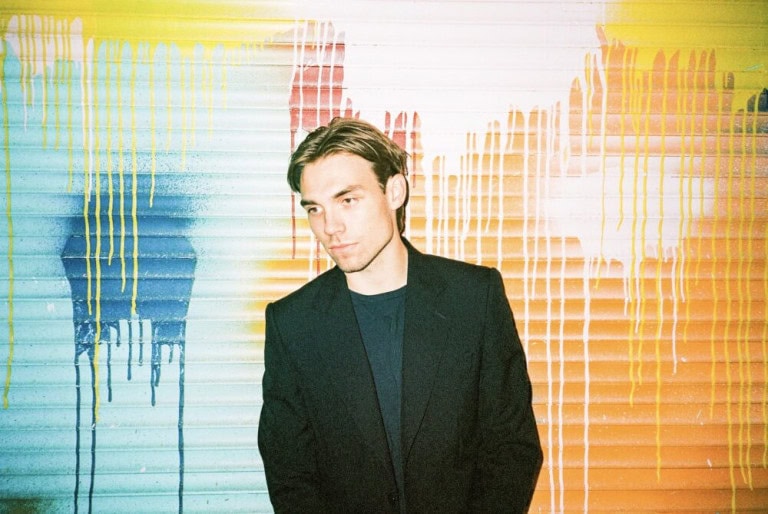
Singer-Songwriter Brandyn Burnette Charts His Own ‘F.A.T.E.’
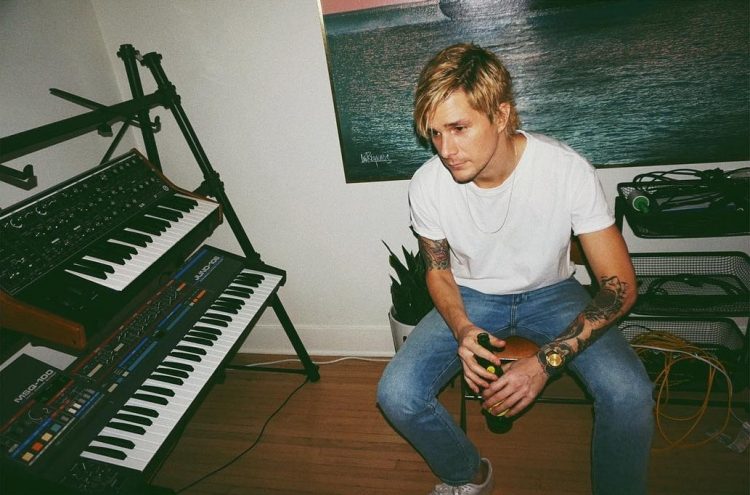
Singer-songwriter Brandyn Burnette has pretty much done it all. You might’ve caught him back
on American Idol in 2016, where his version of “Lost” resulted in 1 million monthly plays following his
performance. He’s also co-written hits for a diverse array of performers, including Keith Urban, Rich the
Kid, and Backstreet Boys, which reflect his own influences – a bit of soul and R&B, some pop, and even a
touch of punk and hip-hop.
This post may have affiliate links, meaning we earn a small commission on purchases through the links (at no extra cost to you). This does not change our opinion but does help support the site. Thank you!
As well, he’s been a featured performer on other artists’ tracks, recently including “Wish You Were
Here” with Dutch producer Afrojack.
Along with this list, Burnette’s been establishing himself as an independent artist, under his own name
with R&B-pop crossover tracks like the recent “Addicted” and “Punching Bag” and with previous
releases through his EMAN8 moniker.
Topping this off, Burnette is gearing up for EP F.A.T.E., his first independent release in five years and one
pulling from his disparate spectrum of influences.
We had a chance to chat with Burnette about his varied career thus far, his current and upcoming
releases, and what he has in store for the future.
You’re inspired by pop, R&B, and punk. What draws you to these genres, and what’s your approach
for blending them together?
Growing up all over the U.S., I was heavily inspired by different influences and genres from each place I
lived. As a child, I grew up in Long Beach, California, where I discovered West Coast bands like Sublime
and hip-hop artists like 2pac and Snoop Dogg.
I have older sisters that used to only listen to the late ‘90s/early ‘00s pop music — artists like the
Backstreet Boys, NSYNC, Britney Spears, Cristina Aguilera, Destiny’s Child, etc. That period of my life was
spent in Houston, Texas. So, I’ve always been fascinated by pop music.
My dad was a recording artist in the ‘80s, so that’s where the influence of R&B took hold. When I moved
to what I consider my hometown of St. Louis, Missouri, I discovered hip-hop and punk, both very
different yet unique styles that expressed the angst and passion I felt in my adolescence. When it comes
to blending all those genres, I try to write my songs about my life. I incorporate elements from each
genre, depending on the mood or lyrical content.
“Punching Bag” and “Addicted” are your first independent releases in five years. What made you
decide to release music independently again?
I decided to start releasing music again because I realized that I had built a strong streaming community
online, but I hadn’t really told my story through my music the way I wanted to. Releasing independently
has allowed me to explore styles of music as well as choose my own singles and create the world around
them. Deciding to release this new music independently felt like the best way to finally start releasing
songs that I’m passionate about that also tell more of the story of who I am.
Tell us about “Punching Bag” and “Addicted.” What influenced the development of these songs?
“Punching Bag” was written about the end of a six-year relationship. The day I wrote and recorded it, I
was moving out of my house with my ex. It was a very emotional transition for me, as I was leaving
behind a version of me that I was growing out of and beginning to discover the person/artist I was
becoming.
My very first release ever as an artist was an acoustic mixtape called Punch Lines From a
Scattered Mind, which most of my core fans know are stripped, raw versions of songs I grew up writing. I
wanted “Punching Bag” to be reminiscent of those early songs in the sense that it was very story driven
and emotional.
When I made “Addicted,” I was in an entirely new headspace. I had recently met somebody that brought
me out of the despair and pain from my previous relationship. It felt like “Addicted” was the first happy-
ish song I had written in a while. My music up to that point was very hip-hop/soul oriented. A lot of the
sounds I used to create with were electronic and programmed, but when I created the music to
“Addicted” with my buddies, I asked them to layer in live guitars and live bass. That process brought me
back to my roots as a singer-songwriter and instrumentalist.
These two tracks lead into your EP F.A.T.E. What should listeners expect with your EP?
Listeners can expect this EP to take them on an emotional journey. Half of the EP was written about a
bad break up, and the other half was written about finding yourself and falling in love again. There are
highs and lows, uptempos and slower jams, sad songs and love songs. I wanted F.A.T.E. to have a song
for everybody in whatever state of their life or relationship that they are in. The goal of the happier
songs is to uplift and embrace the love, while the goal of the emotional songs is to allow for deeper
introspection and reflection. I wanted to share parts of my life that were uncomfortable as much as I
wanted to share the positive moments.
What was your process for putting together this release?
It’s been an incredibly fun process putting together this project. I can safely say that this is the most
attention to detail I’ve ever put into my music. From the song choices to the sound to the visuals, I really
wanted every part of this record to tell a narrative.
My goal was to capture my life in real time and
highlight my journey from anxiety to euphoria. I wanted to give fans a sense of how I’ve grown as a
person throughout the years, and what I’ve learned about myself through my personal relationships.
You were also recently featured on Afrojack’s “Wish You Were Here.” What was it like collaborating
with him?
Collaborating with Afrojack was definitely something I’ve wanted to do for a long time. The way that we
got connected was very random and purely timing and circumstance. I had just started building this
project with my main producer Nick Henriques, who called me one day to join a session with a Canadian
DJ named DLMT.
That day, I was in the middle of my breakup and expressed to them how weird it was
to be single and how I was missing my ex a lot. DLMT had a track that he wanted me to write over, so I
just let myself feel all those emotions and channeled them into “Wish You Were Here.”
That night, DLMT told me that he was gonna send to Afrojack to see if he’d be interested in releasing it
with us.
I remember thinking to myself that it would probably be a long shot. Next thing I know, I get a
call that Afrojack loved the song and wanted to add some production and release it with us.
In that moment, I realized that raw emotion always wins. We had no clue that the pandemic was about to start,
so the song took on an entirely new meaning when all the world shut down. “Wish You Were Here”
became an anthem for missing all the normal moments like going to a live show or hanging out with
friends, or in my case missing somebody.
You were an American Idol contestant back in 2016. How did being on the show help or hinder your
career?
A lot of people don’t know the entire story behind American Idol, but overall, it was a very positive
experience. I actually decided not to do the show after auditioning and receiving a ticket to Hollywood
Week, but they still decided to air my audition which got me a lot of new fans.
My reasoning for dropping out of the competition was solely creative – I had just come off a record label
and hadn’t put out any music yet. I was working on an EP at the time, and in order to continue on the
show, I was going to have to sign a bunch of paperwork that basically limited me from releasing my own
music. Not only that, but the show was very focused on cover songs, and I wanted to perform my own
songs.
I’m still extremely grateful for the experience of auditioning and receiving four yes’s (including one from
Ryan Seacrest), but ultimately I knew in my heart that a singing competition at that time wasn’t going to
help me become a true artist.
Nothing against American Idol at all, but back in 2016, they were just beginning to let singers perform their own music. It was still very much a competition centered around covering popular songs, and as a songwriter and artist with a vision, that wasn’t the route I wanted to take.
Deciding to not do the show gave me a chance to release my own music independently and start building my career the way I wanted to.
You have an extensive list of songwriting credits to your name, including for Keith Urban, Rich the Kid,
and Backstreet Boys. How do you approach songwriting for yourself versus for someone else?
When it comes to songwriting for other artists, my process varies, but for the most part, I tend to write
from an honest place that I can still connect to.
Most of my songs that other artists have taken were
initially intended to be for me as an artist, but because of the sound or style were picked up by others.
I find that writing from an honest place that’s still universally relatable has been the best way to balance
writing for myself and other artists.
I’ve rarely gone into a session thinking, “I want to write a song for __ today”. But more so, “I want to write a song about an emotion I’m feeling.” Typically when I lead that way, I find myself stumbling on a concept or style to match that emotion. And from there, it’s more about who would sound best singing this. Sometimes, it’s me. Sometimes, it’s another voice or artist in another genre.
A couple of years ago, you did a project as EMAN8. How does the music you do for EMAN8 differ from
your work as Brandyn Burnette?
I decided to do a side project that allowed me to lean more into my gospel/hip-hop roots, which I was
influenced by heavily growing up in churches around St. Louis, Missouri. EMAN8 comes from my
Jamaican middle name “Emanate,” which means to “come forth.”
At the time, I wanted to showcase a new side of my artistry, but I found it to be too different from my
music as Brandyn Burnette. EMAN8 was born out of a desire to express a different side of me artistically
that my fans had never heard before. Sonically, it was rooted in pianos, horns, and soulful chord
progressions – a lot of which I heard growing up in the Midwest. Lyrically, I allowed myself to rap more
on my verses – a style made most recognizable by Midwest hip-hop artists like Kanye West, Outkast, and
Chance the Rapper.
With venues opening and artists announcing tours, what plans do you have for the rest of 2021?
I’m going to be releasing a new song off F.A.T.E. every month throughout the end of this year. My goal is
to reintroduce my fans to this sound and stay consistent with them as I get ready to get out on the road
early next year and start performing this music live.

Ivan Yaskey is a Philly-born menswear fashion blogger and copywriter. When not writing about men's style he's also an EDM and synthpop enthusiast.