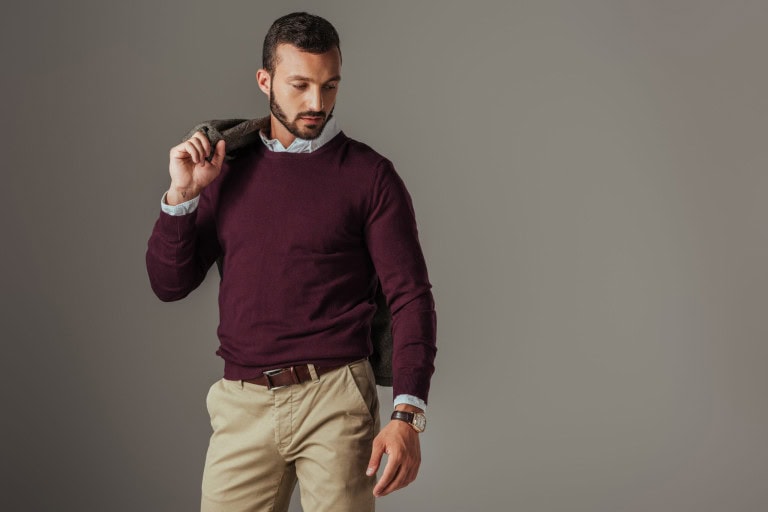
90s Fashion for Men: The Decade That Never Left
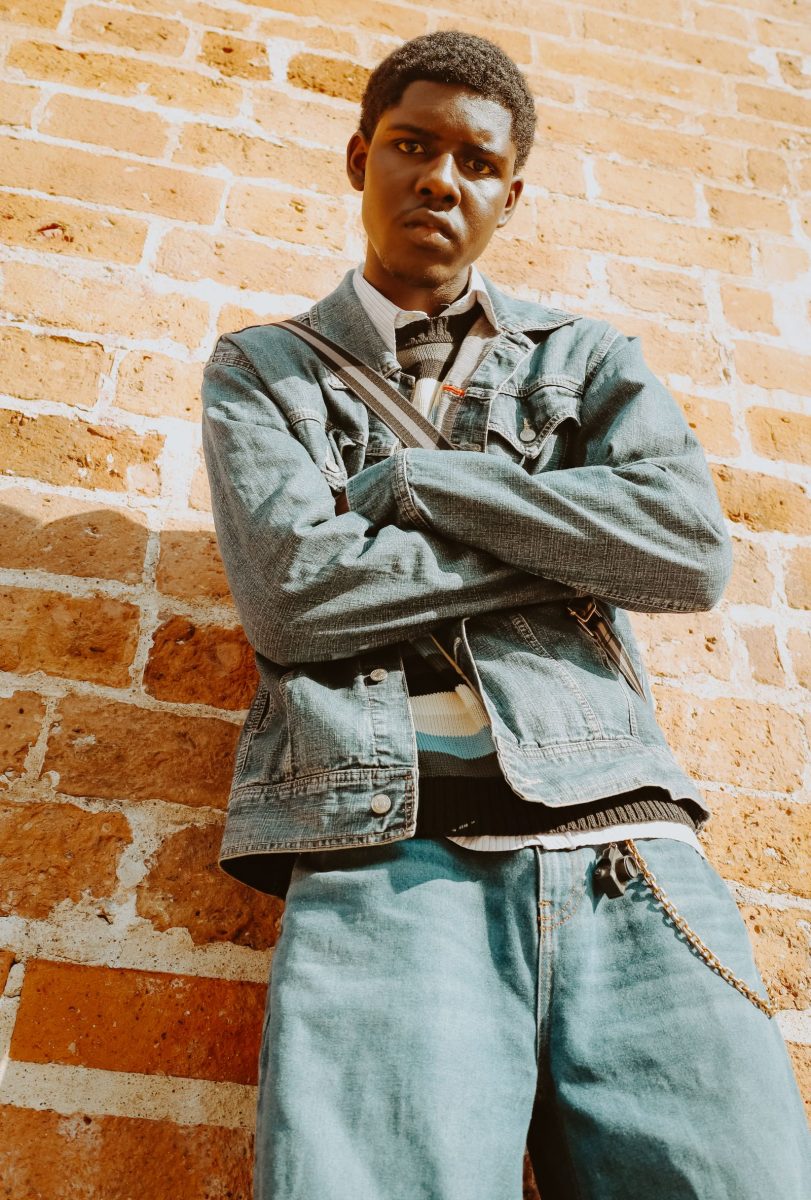
Depending on your age, the ’90s are either the decade you lived through or the vintage bin you shop — either a memory of your first flannel and your first pair of skate shoes, or a mood board you assembled without ever setting foot in the era. Both readings are having a moment, because 90s outfits for men aren’t back so much as they never really left; the silhouette just went quiet for a while and returned wearing better shoes. This is the map: what actually defined the decade, the tribes that split it, why it’s quietly running today’s trends, and how to wear it now without looking like you raided a thrift store blindfolded.
This post may have affiliate links, meaning we earn a small commission on purchases through the links (at no extra cost to you). This does not change our opinion but does help support the site. Thank you!
If you want the wider context — where the ’90s sit among old money, streetwear, gorpcore and the rest — our aesthetics pillar.
What Defined 90s Menswear?
Ninety-percent of what we call “90s fashion” comes down to one idea: the decade traded the shoulder-padded excess of the ’80s for looseness, comfort, and a studied lack of effort. Where the ’80s shouted, the ’90s slouched. Fits got bigger, fabrics got softer, and the whole point became looking like you hadn’t tried — which, ironically, took some trying.
It was also the first decade where menswear openly ran on subculture. There was no single “90s look,” because the era fractured into tribes — music scenes, city scenes, sport scenes — each with its own uniform. What united them was proportion (roomy over fitted), a denim obsession, and a comfort with logos and graphics that the previous generation would have found garish. As a note, the fabrics tell the story on their own: flannel, heavyweight cotton jersey, stonewashed denim, nylon.
The through-line, then, is attitude over polish. The ’90s man dressed down on purpose, and getting the decade right today is mostly about understanding which down he was dressing.
The Tribes of 90s Style
The fastest way to actually wear the era is to pick a lane. Here are the five that defined it — brief each, then borrow.
Grunge
Born in the Pacific Northwest and delivered to the mainstream by a few very loud guitars, grunge was anti-fashion that accidentally became fashion. The uniform: an oversized plaid flannel shirt (worn open, tied at the waist, or both), a faded band tee underneath, ripped and washed-out jeans, and beaten-up boots or high-tops. It read deliberately unbothered — the whole aesthetic was a shrug. Grunge is also the single easiest 90s tribe to raid today, largely on the strength of the flannel and the light-wash denim that anchors it.
Hip-Hop: Baggy and Logo-Loud
If grunge whispered, hip-hop announced. The 90s hip-hop wardrobe ran on scale and branding — extremely baggy jeans, oversized jerseys and graphic sweatshirts, work boots, and logos worn proudly and large. This was the decade streetwear grew up, when a brand name across the chest was the flex and the fit got roomier every year. It’s arguably the most directly influential of all the tribes on how men dress right now — the entire modern baggy jeans revival traces its lineage straight back here.
Minimalist Cool
Not everyone in the ’90s was drowning in flannel or denim. On the other end sat a lean, urbane minimalism — think Helmut Lang and Calvin Klein — built on clean lines, muted palettes, and a near-monastic restraint. Slim black trousers, plain white tees, unstructured tailoring, matte black boots, nothing shouting. It was the decade’s quiet-luxury ancestor (read: expensive-looking without a visible logo), and if the maximalist tribes feel like too much costume, this is the one that translates to a grown man’s wardrobe with almost no adjustment.
Skate Culture
Skate style was its own republic — practical, regional, and fiercely uninterested in what fashion thought. Baggy jeans and cargos for room to move, graphic tees, hoodies, decal-covered caps, and, above all, chunky, durable sneakers built to survive griptape. Skate carried its own footwear canon, and its DNA is all over the current chunky-sole moment; our guide to skate sneakers picks up that thread. This tribe suits the man who wants the 90s silhouette with genuine, everyday function baked in.
Preppy-Casual, Sitcom Edition
Then there’s the version beamed into every living room: the easy, colorful, suburban-casual look of the decade’s sitcoms. Tucked or half-tucked graphic and striped tees, relaxed chinos and light jeans, denim shirts worn as overshirts, clean low sneakers, the occasional bomber. It was preppy sanded down and made comfortable — approachable, a little cornball in the best way, and the most office-adjacent of the five. On the same token, it’s the gentlest on-ramp for anyone who finds the harder subcultures a stretch.
Why the 90s Run Today’s Trends
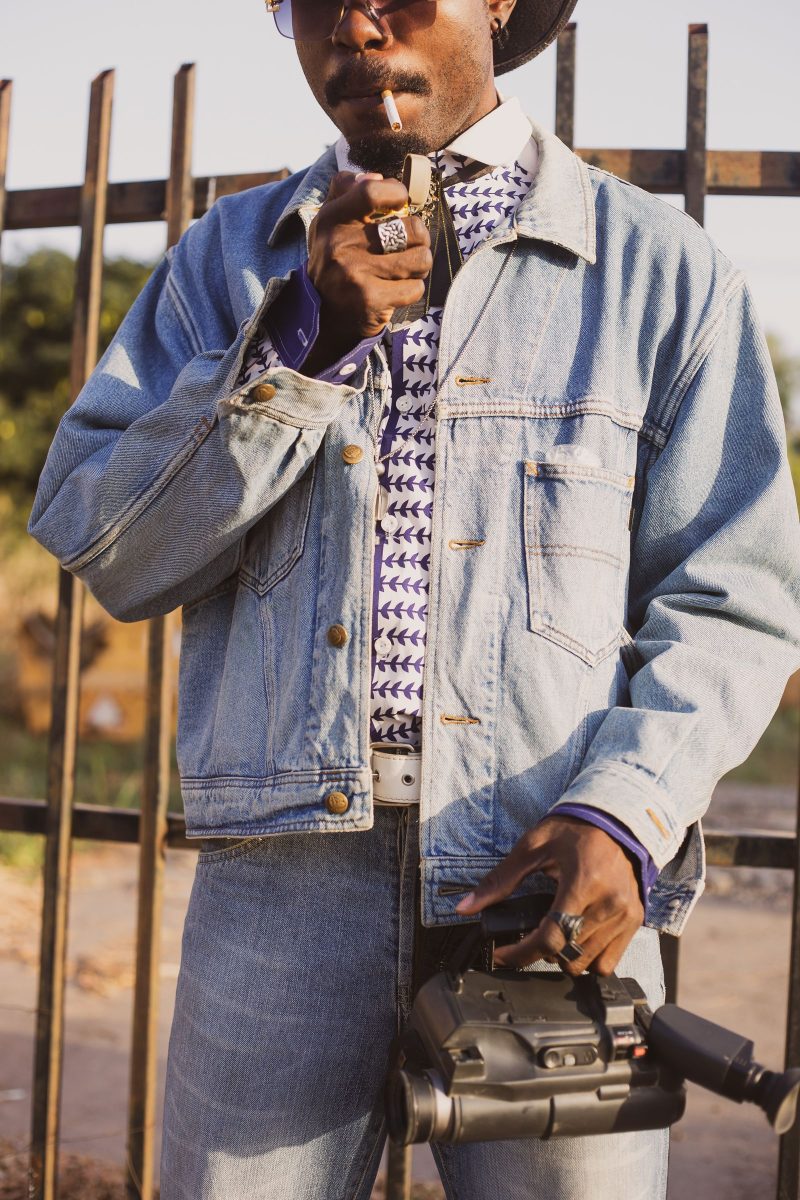
Here’s the part that isn’t nostalgia talking. Look at what’s actually selling and trending in menswear right now, and most of it has a 90s birth certificate.
The silhouette flipped back. After roughly fifteen years of skinny-everything, the pendulum swung hard toward volume — and volume is the 90s. Roomy, relaxed, sit-off-the-body proportions are the default again, which is why the baggy jeans and dad jeans conversations dominate the denim aisle. Those aren’t new ideas; they’re the decade’s core geometry, reissued. The fact that the site keeps returning to both is the tell.
The shoes got chunky. The dad-sneaker and skate-shoe resurgence is a direct 90s callback — bulky soles, retro tech silhouettes, a proud lack of sleekness. The exact chunk the 2000s spent a decade trying to slim down is now the whole point.
Graphics and vintage tees are currency. The faded band tee, the branded crewneck, the genuine (or genuine-looking) 90s graphic — these are among the most traded, most coveted items in menswear, “grail quality” for the right print. More recently, however, the demand has outrun the supply, which is exactly why the modern reproductions exist.
Put together, the case is hard to argue with: the 90s aren’t a trend cycle you’re waiting out. They’re the operating system current menswear is running on.
The Modern Formula: Reference, Don’t Reenact
The difference between looking intentional and looking like a costume comes down to a single principle — borrow the 90s silhouette, but pair it with current grooming and footwear so the era reads as a choice, not an accident. Reference the decade; don’t reenact it.
Anchor with one 90s element, not five. Pick the silhouette or the piece — the baggy jean, the flannel, the chunky sneaker — and let the rest of the fit stay contemporary and clean. One era-signal reads deliberate; head-to-toe reads like a themed party.
Keep the fit modern where it counts. Roomy is the goal, but roomy still needs a shape. Balance a voluminous bottom with something closer up top, or vice versa — the 90s got away with oversized-on-oversized, but you’ll look sharper splitting the difference.
Let grooming do the time-stamping. This is the quiet trick. A current haircut and tended-to facial hair instantly place a 90s outfit in the present — the clothes can time-travel as long as the man wearing them clearly doesn’t. It’s the fastest way to signal “considered” over “thrifted at random.”
Use modern footwear as the tie-breaker. A clean, current sneaker or boot grounds even the most nostalgic fit. The shoes are where you tell the room this was on purpose.
What to Skip
Not everything the decade did deserves a revival — and knowing what to leave in the box is half the skill.
- JNCO-scale jeans. Baggy is back; tent is not. If the hem swallows the shoe whole, you’ve overshot.
- Logo overload. One branded piece is a statement; five is a billboard. The 90s could stack them — you shouldn’t.
- Full head-to-toe denim in matched washes. The Canadian tuxedo works when the washes contrast. Same-shade top-to-bottom is where it curdles.
- Frosted tips and the mall-goth full kit. Some 90s grooming was of its time and should stay there. Borrow the clothes, not the gel.
- Costume accessories. Puka shells, wallet chains, tinted micro-sunglasses — one, ironically and sparingly, at most. A fistful and you’ve tipped into fancy dress.
90s Fashion for Men: FAQ
Is 90s fashion still in style in 2026?
Very much so — arguably more than ever. The baggy silhouette, chunky footwear and vintage-graphic obsession that define current menswear are all 90s inheritances, so the decade isn’t so much “in style” as it is the foundation a lot of today’s style is built on.
How do I wear 90s clothes without looking like I’m in costume?
Anchor the outfit with one 90s element and keep everything else current — modern haircut, tended facial hair, clean contemporary shoes. The era should read as a deliberate reference, not a full reenactment.
What’s the easiest 90s look to start with?
Grunge or sitcom-casual. A flannel over a plain tee with relaxed light-wash jeans, or a denim overshirt with chinos and low sneakers, gets you unmistakably 90s with pieces you can wear anywhere.
Are baggy jeans really back for men?
Yes — the relaxed, roomy fit has replaced skinny as the default. See our full breakdown in baggy jeans for men and the related dad jeans guide.
The Takeaway
If you remember one thing, make it this: the 90s revival is about borrowing the silhouette, not staging the era. Pick one anchor — the baggy jean, the flannel, the chunky sneaker — pair it with modern grooming and clean footwear, and you’ve got a look that reads intentional rather than costumed. Start with the aesthetics pillar.

Born and raised in Austin, David is a dedicated writer and avid fragrance lover. When he's not trying out perfumes, he enjoys traveling and exploring new restaurants.