Men’s Style Aesthetics: Find Your Look, From Old Money to Streetwear
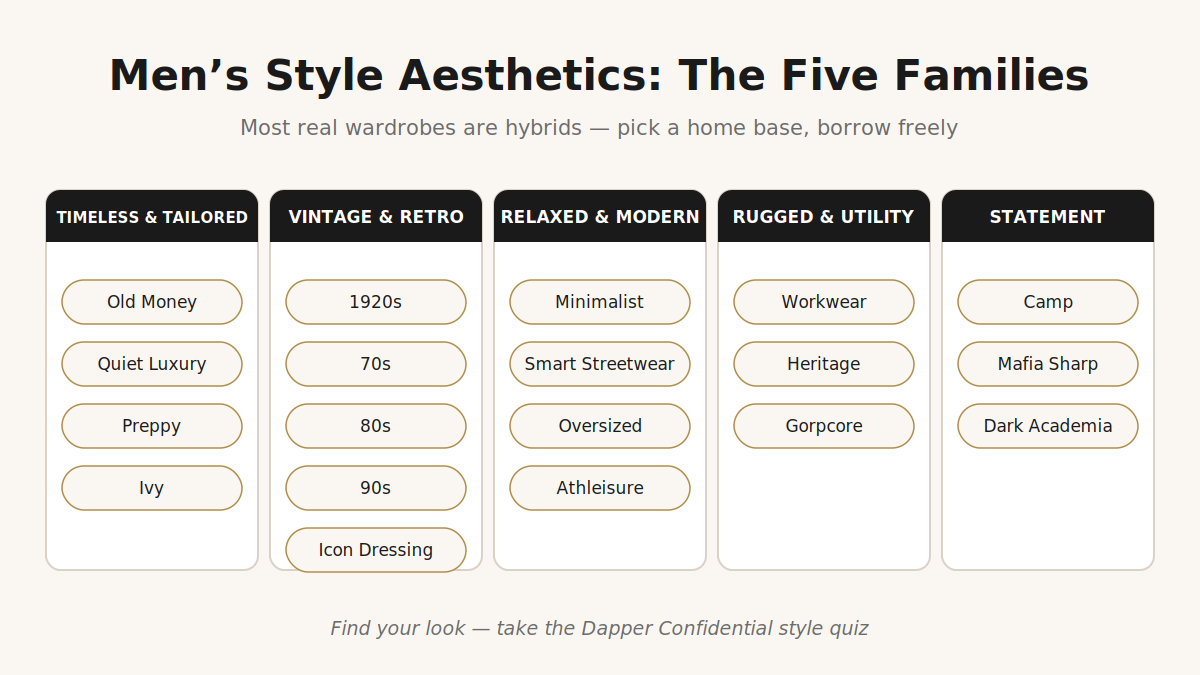
Somewhere in the last few years, getting dressed turned into picking a side. Scroll for ten minutes and you’ll be told you’re quiet-luxury, or gorpcore, or dark academia, or that the fit you already own is secretly “coastal grandpa” — everyone’s a -core now, and the algorithm hands out labels faster than anyone can actually wear them. That naming frenzy is noisy, but underneath it there’s something genuinely useful: a map of the distinct style identities men are dressing toward, and a way to find the one that fits your life instead of your feed. This is that map — a taxonomy of the major men’s style aesthetics, what each one signals, who it suits, and where to go deep on the ones that click. And if you’d rather be pointed straight at your answer, our Style Quiz does the sorting for you in a few minutes.
This post may have affiliate links, meaning we earn a small commission on purchases through the links (at no extra cost to you). This does not change our opinion but does help support the site. Thank you!
What Is a Style Aesthetic, Exactly?
A style aesthetic is a coherent visual identity — a repeatable set of silhouettes, colors, materials, and references that add up to a recognizable look. It’s the difference between owning clothes and having a point of view: an aesthetic tells you what to reach for in the morning and, just as usefully, what to leave on the rack. Think of it as a throughline rather than a uniform. Two men can both dress “minimalist” and own almost nothing in common, because an aesthetic is a logic, not a shopping list.
The word gets thrown around loosely, so one distinction is worth drawing early. A trend is a moment — a specific item or micro-look that spikes and fades. An aesthetic is durable; it has history, a set of principles, and enough range to carry a whole wardrobe across seasons. Quiet luxury is an aesthetic. A particular loafer going viral is a trend. The most stylish men tend to commit to one or two aesthetics they genuinely relate to, then let trends pass through without redecorating the whole house.
How to Actually Find Yours (Hint: Not From a Moodboard)
Here’s where most aesthetic-hunting goes wrong — men pick the look they admire on someone else instead of the one that survives contact with their actual day. A moodboard can spark the idea, but three real-world filters decide whether it sticks. Run any aesthetic through them before you commit.
Start with your lifestyle. What does a normal week actually ask you to wear? A workwear-heritage wardrobe is glorious on a man who’s outdoors and hands-on, and quietly miserable on someone in back-to-back video calls. Match the aesthetic to where you spend your hours — office, studio, job site, school run — and you’ll wear it. Match it to a fantasy version of your life and it’ll live in the closet.
Factor in your body and your coloring. Aesthetics carry built-in silhouettes, and silhouettes have opinions about proportion. Oversized, relaxed streetwear reads intentional on a taller frame and can swallow a shorter one, while sharp tailoring and Ivy proportions tend to flatter across the board. The same goes for palette — some looks lean pale and cool, others warm and earthy — so lean toward the aesthetic whose native colors already suit your skin.
Be honest about budget — but don’t let it disqualify you. Every aesthetic on this list has a version that works at a real-world price; the expensive-looking ones are usually about fit, restraint, and material choice more than spend. That said, some lean fabric-and-tailoring heavy (old money, quiet luxury) and some lean piece-and-attitude heavy (streetwear, camp), so factor in which kind of investment you’re actually up for.
If that’s a lot of self-assessment to do solo, that’s exactly what our Style Quiz is built for — it weighs lifestyle, proportion, and preference and routes you to the aesthetics most likely to stick. Below is the full field guide, grouped into five families so you can see how the looks relate — and where they blur.
Timeless & Tailored
The classicist’s corner. These aesthetics are built on proportion, quality, and a certain refusal to chase the calendar — the looks that photographed well decades ago and still do.
Old Money
Old money dresses to signal belonging rather than attention — heritage fabrics, muted palettes, impeccable fit, and not a visible logo in sight. Think unstructured navy blazers, oxford-cloth shirts, pleated trousers, and loafers worn like they were inherited (they might have been). Its modern, more minimalist evolution is quiet luxury guide, which strips the country-club references down to pure material quality. It suits the man who wants to look established and unbothered, and it rewards restraint over spend — start with our old money office outfits, the old money color combos that hold the whole thing together, and the old money shoes that finish it.
Preppy
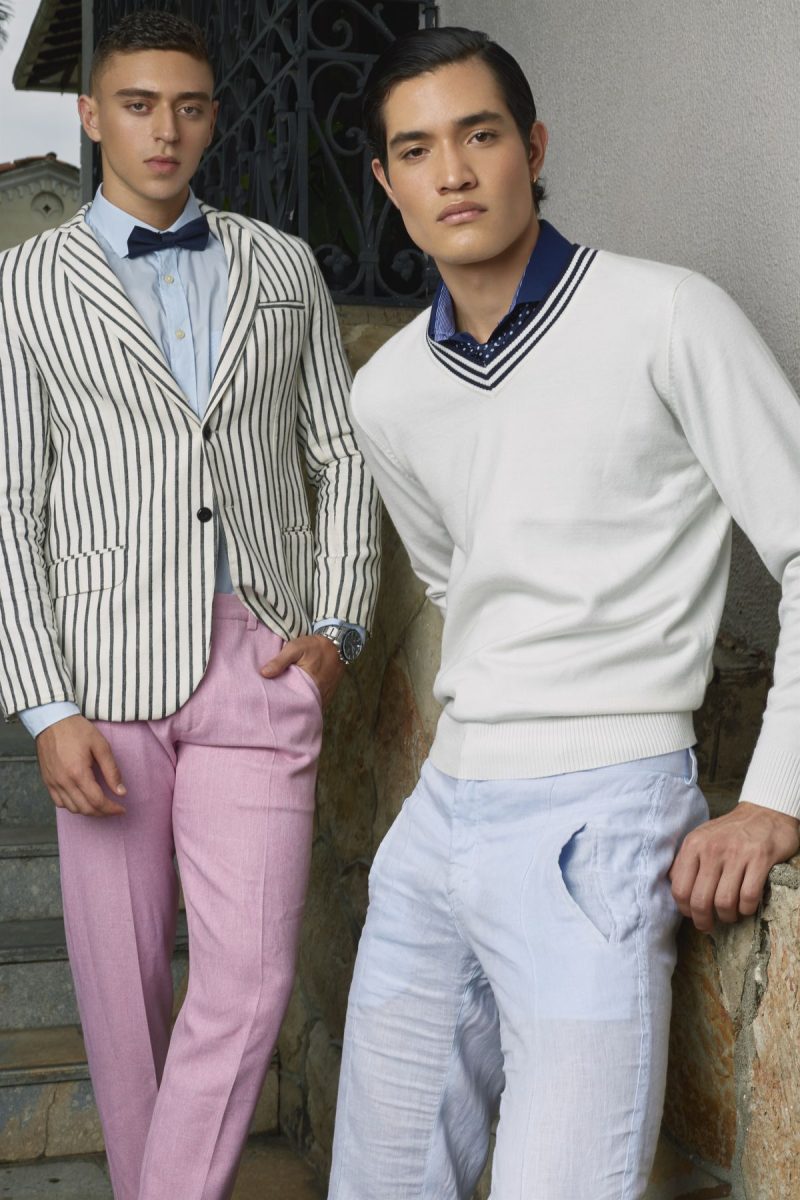
Preppy is old money’s louder, sportier cousin — collegiate, coastal, and unafraid of color. The uniform runs to polos and rugby shirts, chinos and shorts, oxford button-downs, boat shoes and loafers, with the odd cable-knit thrown over the shoulders. It’s cheerful without tipping into costume, which makes it a forgiving entry point for men who find strict tailoring stiff. Our guide to preppy chic for guys lays out the full playbook.
Ivy
Ivy is the tailored ancestor of prep and the quiet backbone of American style — think 1950s campus wardrobes: sack blazers with natural shoulders, repp ties, flat-front chinos, penny loafers, and oxford shirts. It’s less about color splash than about a specific, slightly relaxed cut that reads intelligent and understated. It suits men who love classic menswear but find full old-money formality a touch much — a sweet spot between prep and tailoring. Our Ivy style guide guide covers the canon.
Vintage & Retro
For the man who dresses with a decade in mind. These aesthetics borrow a specific era’s silhouette and update the fit so it reads considered rather than costume — the line between “period reference” and “fancy dress” is all in the tailoring.
1920s / Gatsby
The Jazz Age look is pure sartorial theater — high-waisted wide trousers, waistcoats, patterned knits, club collars, and two-tone spectator shoes. Done right (read: with modern fit and a light hand on the accessories) it’s one of the most romantic ways a man can dress. It suits confident dressers and event-goers more than everyday wear, though a waistcoat or a club collar can smuggle a little of it into normal rotation. Start with our 1920s men’s fashion guide.
80s Retro
The ’80s aesthetic is bold, graphic, and unapologetic — bomber and varsity jackets, high-waisted pleated trousers, loud knits, and plenty of pastel and neon energy. It’s having a real moment again as Gen Z mines the decade, and worn with restraint it lands playful rather than kitsch. This one suits expressive dressers who want their clothes to have a pulse. Our ultimate guide to 80s men’s fashion shows how to rock the retro without the costume.
Icon Dressing
Some men don’t pick a decade — they pick a person. Icon dressing means building your look around a single style figure and reverse-engineering the principles: Cary Grant for effortless mid-century tailoring, Steve McQueen for rugged cool, Paul Newman for relaxed American ease. It’s less an aesthetic than a method, and a genuinely good one for finding your footing. Our guide on how to dress like Cary Grant is the template for the tailored end of it.
70s & 90s
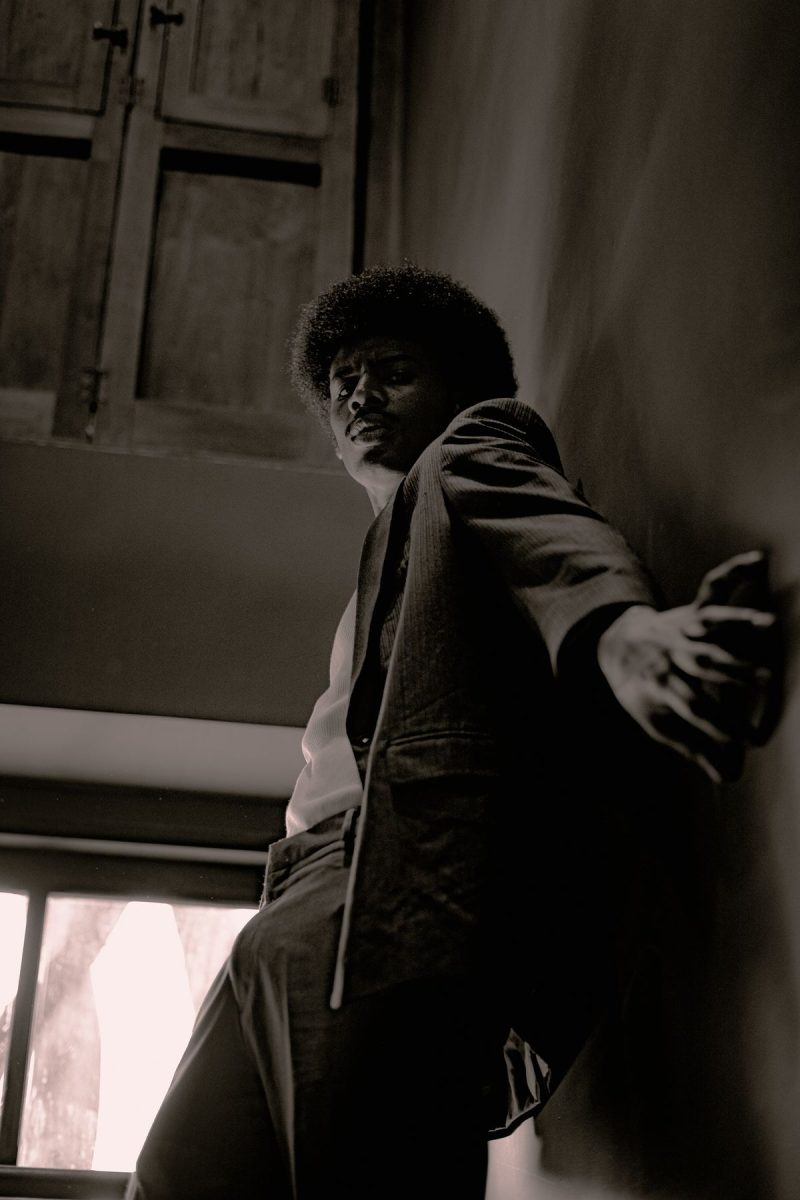
Two more decades worth mining, at opposite ends of the mood spectrum. The ’70s bring earth tones, wide lapels, flared trousers, and a certain louche warmth — see our 70s fashion guide guide. The ’90s swing the other way into minimal, slouchy ease: relaxed denim, box-fresh sneakers, muted layering, and a general lack of trying-too-hard, which our 90s fashion guide guide breaks down. Both suit men who want vintage texture without full period commitment.
Relaxed & Modern
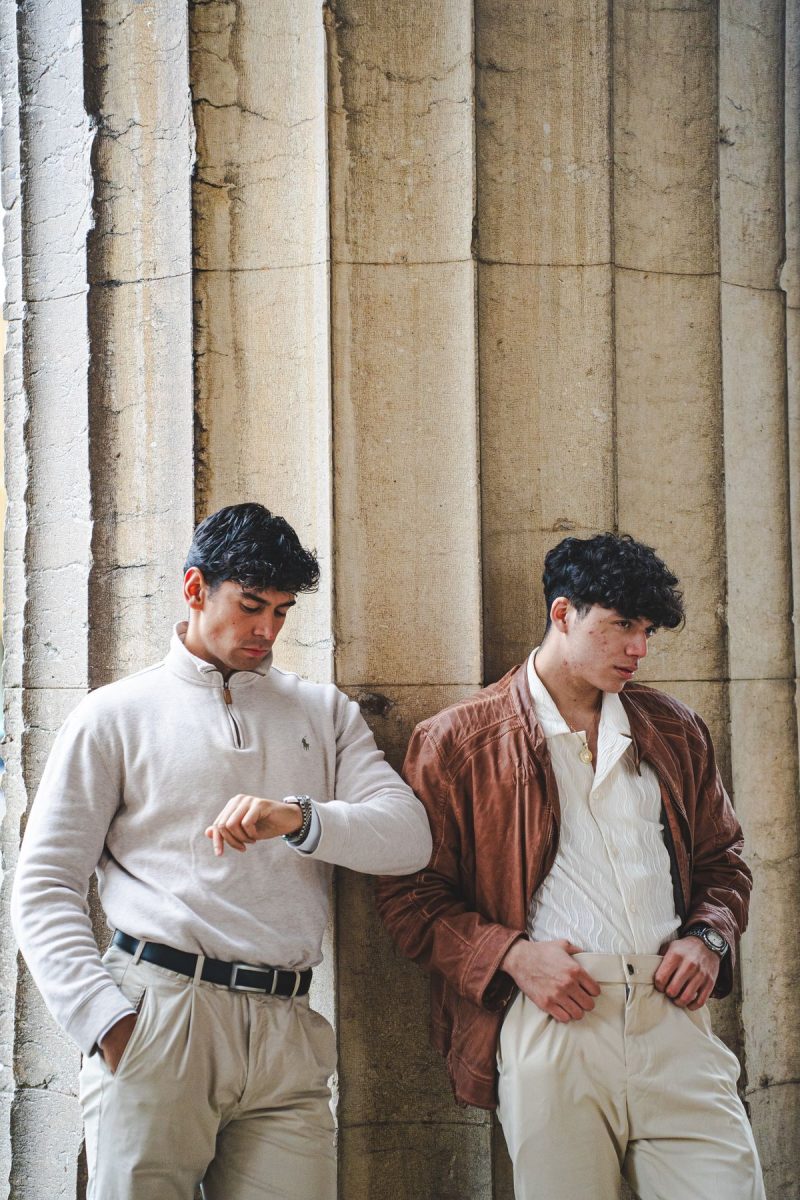
The dominant register of how most men actually dress now — clean lines, comfort, and a contemporary sense of proportion. If nothing else on this list feels like “you,” odds are your home is somewhere in this family.
Minimalist
Minimalism is the discipline of subtraction — a tight palette, clean silhouettes, quality basics, and zero noise. Think monochrome layering, unbranded tees and knits, tapered trousers, and a small rotation of shoes that all quietly work together. It suits men who want to look pulled-together without thinking hard every morning, and it’s the most budget-flexible aesthetic here because the whole point is owning less, better. Our minimalist style guide guide covers building the capsule.
Smart Streetwear
Smart streetwear is the handshake between the sneaker world and grown-up dressing — elevated basics, considered sneakers, clean outerwear, and just enough tailoring to keep it from reading like loungewear. Picture a crewneck under an unstructured blazer, tapered trousers, and a pristine pair of low-tops. It suits creative-professional environments and younger dressers who want comfort without looking careless. Our smart streetwear guide guide maps the balance.
Oversized & Relaxed
The defining silhouette shift of the last decade — deliberately roomy proportions, dropped shoulders, wide-leg trousers, and boxy knits worn as a choice, not an accident. Balance is everything here: oversized on top usually wants something leaner below, or the whole thing collapses into shapeless. It suits taller frames and confident, fashion-forward dressers most naturally. Our guide to oversized menswear explains how to keep relaxed from reading sloppy.
Athleisure
Athleisure blurs the gym and the street — technical fabrics, joggers, hoodies, and performance sneakers styled for daily life rather than a workout. The trick that separates stylish from schlubby is fit and cohesion: tapered joggers, a clean overshirt or bomber, and sneakers chosen on looks, not just cushioning. It suits active, on-the-go men who prize comfort and want it to still look intentional. Our jogger outfits for men guide is the starting point.
Rugged & Utility
Clothes with a job to do — or at least the look of it. These aesthetics prize durability, honest materials, and function you can see, and they’ve become some of the most quietly influential looks in menswear.
Workwear & Heritage
Workwear-heritage borrows from the American working wardrobe — waxed and chore jackets, selvedge denim, flannel, work boots, and hard-wearing canvas and duck cloth. It ages beautifully, both the clothes and the look, and it carries a built-in sense of substance without any formality. It suits hands-on, outdoorsy men and anyone drawn to clothes that earn their keep and improve with wear. Our workwear style guide guide covers the foundational pieces.
Gorpcore & Outdoor
Gorpcore takes technical outdoor gear — shell jackets, fleece, trail runners, cargo trousers — out of the mountains and onto the sidewalk. Once ironic, it’s now a genuine aesthetic built on function-as-fashion, and it overlaps happily with athleisure and streetwear. It suits practically minded men who like their clothes ready for weather and terrain, real or theoretical. Our hiking outfit for men guide grounds it in the actual gear before you style it around town.
Statement
For the men who dress to be seen. These aesthetics lead with personality — they’re not for blending in, and worn with conviction they’re some of the most memorable looks a man can pull off.
Camp
Camp is maximalism with a wink — bold prints, exaggerated proportions, saturated color, and a knowing sense of theater. It’s playful and expressive by design, closer to peacocking than to any rulebook, and it lives on confidence more than on any specific garment. It suits extroverts and creative dressers who treat getting dressed as fun rather than function. Our camp fashion guide gives the aesthetic its full due.
Mafia / Gangster Sharp
The gangster aesthetic is tailoring turned menacing-cool — sharp double-breasted suits, wide lapels, dark shirts, fedoras, and a palette that leans moody and monochrome. It’s dramatic, cinematic, and unapologetically powerful, drawing straight from the screen. It suits men who love serious tailoring and want a harder, more theatrical edge than old money allows. Our mafia-inspired gangster aesthetic guide breaks down the look.
Dark Academia
Dark academia romanticizes the old-world scholar — tweed blazers, turtlenecks, wool trousers, oxford shirts, and a rich autumnal palette of browns, greens, and charcoal. It’s bookish, moody, and intellectual, with a strong seasonal lean toward fall and winter. It suits men who love texture and layering and want an aesthetic with atmosphere and a story. Our dark academia guide guide covers building the look.
You Can (and Should) Mix Aesthetics
Here’s the permission most of these labels forget to give: almost nobody lives inside a single aesthetic, and you’re not supposed to. Real wardrobes are hybrids — a workwear jacket over minimalist basics, old-money trousers with smart-streetwear sneakers, a dark-academia knit doing weekend duty. The labels are a vocabulary for understanding your taste, not a cage to lock it in.
The one rule worth keeping is coherence over purity. Mixing works when the pieces share something — a palette, a level of formality, a sense of proportion — and falls apart when they’re fighting each other. Pick one aesthetic as your base, the one that matches your everyday life, and treat the others as accents you reach into when the mood or occasion calls. That’s not indecision; it’s how men with genuinely good personal style actually operate.
One more layer most men skip: every aesthetic has a scent. The right fragrance is the invisible finish on a look — earthy and woody for workwear and heritage, clean and understated for minimalist and old money, bold and unmistakable for statement dressing — and our fragrance archive helps you match the bottle to the aesthetic.
Frequently Asked Questions
What are the main types of men’s style?
Men’s style breaks down into a handful of recurring aesthetic families rather than one master list. The tailored-and-timeless camp covers old money, quiet luxury, preppy, and Ivy — looks built on fit and heritage. Relaxed-and-modern covers minimalist, smart streetwear, oversized, and athleisure — the contemporary, comfort-forward register most men live in day to day. Then there’s rugged-and-utility (workwear, heritage, gorpcore), vintage-and-retro (decade-based looks from the 1920s through the ’90s), and statement dressing (camp, gangster sharp, dark academia) for men who lead with personality. Most guys land in one primary family and borrow from a second — which is exactly how it’s meant to work.
The Takeaway
If there’s one thing to carry out of all this, it’s that a style aesthetic is a tool for editing, not a box you have to fit inside — the goal is a look that matches your actual life, flatters your actual frame, and can be built at your actual budget. Pick the family that already sounds like you, go deep on one guide from it, and let the rest inform the edges. And if you want the shortcut, take our Style Quiz — it’s the interactive companion to this page, built to weigh your lifestyle and preferences and hand you your aesthetic (plus the guides to build it) in a few minutes. From there, the old money, minimalist, or preppy deep dives are the natural next stop — and don’t forget the finishing touch: the right fragrance archive is the detail that makes an aesthetic feel like it’s genuinely yours.
This post may contain affiliate links, meaning we earn a small commission on purchases made through them, at no extra cost to you.

Born and raised in Austin, David is a dedicated writer and avid fragrance lover. When he's not trying out perfumes, he enjoys traveling and exploring new restaurants.