Best Beard Dye for Men: Natural Picks for Grays & Coverage
Trying to outrun the grays creeping into your beard? Join the club — one stray silver whisker turns into a scattered constellation faster than anyone warns you, and the fixes range from “leave it” to “dye the whole thing.” This guide sorts the beard dyes worth buying by what you actually need them to do, and walks you through matching a shade and applying it without staining your sink.
This post may have affiliate links, meaning we earn a small commission on purchases through the links (at no extra cost to you). This does not change our opinion but does help support the site. Thank you!
If you’re not sure dyeing is the move at all, our silver fox guide to going gray makes the case for leaning in — but if coverage is the goal, read on. For the bigger picture on keeping the beard itself in shape, start with our guide to shaping a beard.
What Is Beard Dye (and How Is It Different From Hair Dye)?
Beard dye is a coloring product formulated specifically for facial hair — the pigment, developer strength, and contact time are all dialed in for a beard rather than a scalp. That distinction matters more than it sounds. Beard hair is coarser and grows from far more sensitive skin than the top of your head, so beard-specific formulas run gentler on the skin and cure faster, usually in five to ten minutes versus the thirty-plus a box of scalp dye wants.
Can you use regular hair dye on your beard? Technically yes — but you’re gambling. Scalp dyes are built for longer contact times and can leave facial skin irritated, and their color range is calibrated to the lighter, finer hair up top (read: the “medium brown” on the box rarely lands the same on a beard). When in doubt, reach for something made for the face.
Natural & Ammonia-Free vs. Permanent: Which Should You Choose?
This is the fork in the road, and it comes down to one honest question — are you blending in a few grays or covering a beard that’s gone mostly silver?
Natural, ammonia-free, and semi-permanent dyes deposit color on the surface of the hair and fade gradually over a few weeks. They’re the low-commitment pick: gentler on the skin, no harsh line as roots grow in, and forgiving if you get the shade slightly wrong. Henna-based and “wash-in” foams live here. The trade-off is longevity — you’ll be reapplying more often, and on a fully gray beard the coverage can read sheer.
Permanent dyes use a developer to open the hair cuticle and lock pigment inside, which is why they last six to eight weeks and cover stubborn, wiry grays that surface dyes skate right over. The catch: many contain ammonia (which can irritate sensitive skin), the color is committed until it grows out, and a hard regrowth line means you’re on a maintenance schedule. Great for full coverage — less so if you want subtlety.
The general consensus: if you’re touching up or grin-blending, go natural or semi-permanent. If you’re fully covering gray, permanent earns its keep.
How to Pick Your Shade
The most common beard-dye mistake is going too dark. A shade that matches the hair on your head will usually look artificially heavy on your face, because beards catch light differently and a fully saturated jet-black reads instantly fake.
- Match, then drop a shade. Choose the color closest to your natural beard, then go one step lighter. You can always darken later; you can’t un-dye.
- Blend, don’t erase, the gray. If you like a little salt-and-pepper, a semi-permanent shade a touch lighter than your base leaves some silver showing on purpose — the “distinguished, not desperate” look.
- Mind the undertone. Ashy browns suit cooler complexions; warmer, red-leaning browns suit olive and darker skin. Coarse, resistant gray often needs a dedicated formula (see our picks below) to take color evenly.
How to Apply Beard Dye (and Always Patch-Test First)
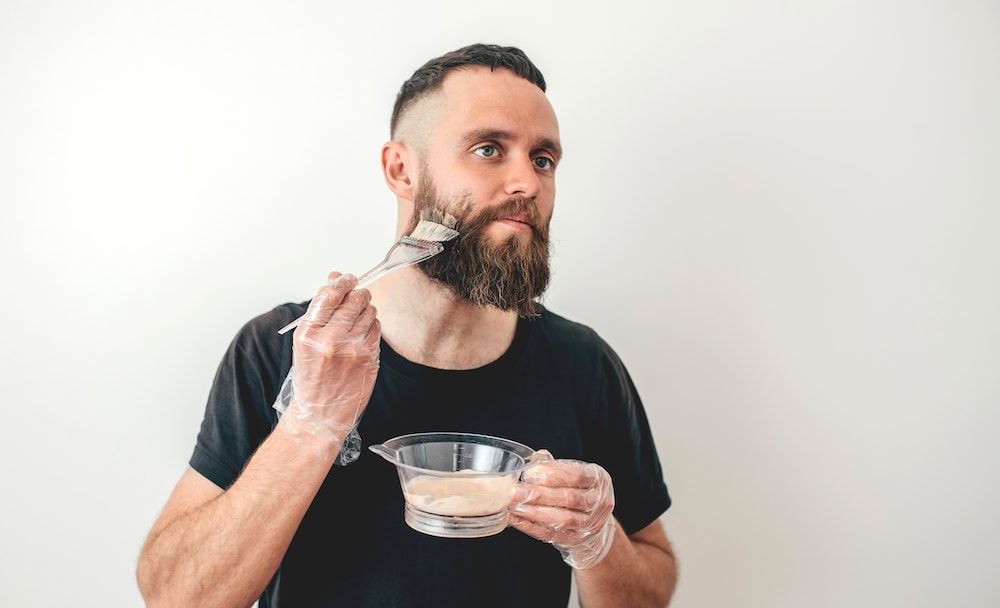
Do a patch test 24 hours ahead — every time, even with a brand you’ve used before. Dab a little mixed dye on your inner forearm or behind the ear, wait a full day, and check for redness or itching. Reformulations happen, and PPD sensitivities can appear out of nowhere.
Once you’re clear:
- Start with a clean, dry beard. Wash a few hours ahead (not immediately before) so the hair takes color evenly, and skip the beard oil on dye day.
- Protect the perimeter. Gloves on, and a thin ring of petroleum jelly along your skin line keeps stray pigment off your cheeks and neck.
- Mix and apply per the instructions. Work the dye in against the grain to reach the roots, coating the grays fully.
- Watch the clock. Don’t exceed the recommended contact time — usually five to ten minutes. Longer doesn’t mean better; it means darker and blotchier.
- Rinse until it runs clear, pat dry, and hold off on washing again for a day so the color sets.
- Trim after, not before, so you’re shaping the final colored result.
Does Beard Dye Damage Your Beard?
Used correctly, occasional dyeing won’t wreck your beard — but it’s not weightless either. Ammonia and peroxide in permanent formulas can leave hair drier and coarser over time, and the skin underneath is more reactive than your scalp, which is exactly why the patch test isn’t optional. Space out applications, lean on natural or ammonia-free options if your skin protests, and keep the beard conditioned between dye days. A good routine matters more than the dye itself — our beard oil vs. beard balm breakdown covers how to keep color-treated hair from going brittle.
Our Picks for the Best Beard Dye for Men
We’ve grouped these by what they’re built for — full coverage, natural blending, no-mix convenience, or spot touch-ups — so you can jump to the job you’re doing. Every product is for current availability and formulation.
Permanent & Full-Coverage Dyes
Just for Men Beard Dye
A drugstore workhorse for a reason. The gel formula goes on fast, sets in about five minutes, and comes in a broad range of browns and blacks calibrated for facial hair rather than scalp. It’s the pick when you want reliable, top-to-bottom gray coverage without thinking too hard about it — just resist grabbing a shade darker than you need.
Pros: Fast five-minute cure; wide shade range; widely available and inexpensive.
Cons: Contains ammonia-adjacent chemistry that can irritate sensitive skin; hard regrowth line means frequent upkeep.
Shop Now
SoftSheen-Carson Dark & Natural Color
Built for coarse, resistant hair, this one takes evenly where thinner formulas skip. A single application holds up to roughly six weeks, and it’s a standout for Black men and anyone with dense, wiry gray that lighter dyes struggle to saturate.
Pros: Excellent on coarse, resistant hair; long six-week hold; even, full coverage.
Cons: Permanent commitment; requires careful timing to avoid over-darkening.
Shop Now
Natural & Henna-Based
Grizzly Mountain Beard Dye
The go-to for the ammonia-free crowd. This henna-and-herb-based dye skips harsh chemicals entirely and ships with a tinting brush for controlled application. Color builds more gradually than a chemical permanent, so it rewards patience — but you get lasting coverage without the developer sting.
Pros: Ammonia- and chemical-free; genuinely natural ingredient list; includes an applicator brush.
Cons: Longer application and a learning curve; shade range narrower than synthetic options.
Shop Now
Semi-Permanent & No-Mix (Wash-In)
True Sons Hair Dye
A semi-permanent dye in an aerosol foam canister that needs zero mixing — dispense, work it in, rinse. The foam is genuinely mess-resistant, and the color fades gradually rather than growing out in a hard line, which makes it forgiving for first-timers.
Pros: No mixing; low-mess foam delivery; soft, grow-out-friendly fade.
Cons: Less durable than permanent dyes; sheerer coverage on fully gray beards.
Shop Now
Cremo Beard Dye
A no-mix option with a shaving-cream-like consistency that spreads easily and rinses clean. Color holds up to about six weeks, landing it between a true semi-permanent and a light permanent — a solid middle-ground for regular users who want convenience without constant reapplication.
Pros: No mixing; smooth, easy-spreading texture; up to six-week hold.
Cons: Fewer shade choices; coverage on stubborn grays trails the dedicated permanents.
Shop Now
Touch-Ups & Color Matching
Godefroy Tint Kit
Twenty single-use color capsules, pre-measured so you mix only what a spot treatment needs. This is the precision tool — ideal for blending a patch, a graying mustache corner, or thin spots without committing a whole tube. Waste is minimal and the per-application cost is low.
Pros: Pre-measured single-use capsules; minimal waste; great for targeted touch-ups.
Cons: Fiddly for full-beard coverage; more steps than a squeeze-and-go gel.
Shop Now
Madison Reed
Leans on a color-matching quiz and video consultation to get your shade right before you buy — the answer for anyone who’s been burned by guessing off a box. Color runs closer to two weeks, so it’s better suited to gray-blending than long-haul full coverage.
Pros: Guided color-matching; skin-conscious formula; natural-looking blend.
Cons: Shorter, roughly two-week longevity; pricier than drugstore options.
Shop Now
The Takeaway
The one decision that matters here is blend vs. cover: reach for a natural or semi-permanent dye if you’re softening a few grays and want a forgiving, low-commitment fade, and go permanent only when a mostly-silver beard needs full, weeks-long coverage. Patch-test every time, match your natural shade and then go one step lighter, and keep the beard conditioned between applications so color-treated hair doesn’t turn to straw. From here, shore up the fundamentals with our guide to shaping a beard, and if you’d rather skip the dye altogether, the silver fox guide to going gray shows how to own the silver. A good beard care kit rounds out the routine.

Born and raised in Austin, David is a dedicated writer and avid fragrance lover. When he's not trying out perfumes, he enjoys traveling and exploring new restaurants.